


Busy parents can successfully homeschool by establishing a consistent routine that balances learning with daily life. Utilizing online resources simplifies access to quality materials, while incorporating educational moments into chores cultivates practical skills. Creating a dedicated learning space enhances focus and engagement. Flexibility in scheduling accommodates individual needs, and collaboration with other homeschooling families promotes community support. Finally, prioritizing self-care is crucial for parents to maintain resilience. Explore more strategies customized for busy homeschooling families.
Establish a Consistent Routine
While establishing a consistent routine may seem intimidating for some homeschooling families, it plays a crucial role in promoting a child’s development. Predictable scheduling allows children to thrive by creating consistent expectations and familiar patterns, cultivating feelings of safety and security. Clear daily routines enable children to traverse their tasks independently, strengthening their capability and confidence.
Moreover, structured activities facilitate social and emotional growth, reducing challenging behaviors. Developing effective homeschool routines begins with clear objectives and well-defined goals, offering children a sense of control over their learning environment. Engaging, predictable settings also support active participation and positive experiences, ultimately enhancing educational outcomes and promoting a sense of belonging within the family energetic. A consistent approach leads to lasting benefits for students, contributing to their improved academic performance. In fact, studies show that homeschool students can master material in just 2 to 3 hours a day, achieving academic success while maintaining structured routines. This aligns with findings that homeschooled students typically score 15 to 25 percentile points above public-school students on standardized tests.
Utilize Online Resources and Tools
A consistent routine sets the foundation for effective homeschooling, and integrating online resources and tools can substantially enhance this educational experience. With approximately four million U.S. children being homeschooled, the demand for specialized digital curriculum platforms is ever-growing. Online platforms such as Homeschool Planet are noted for their exceptional resources, helping families traverse this educational terrain. Research from institutions like Johns Hopkins University supports the development of homeschooling resources, showing a compound annual growth rate of 10.1% from 2016 to 2021. These advancements in online education are vital for busy parents, providing flexibility while ensuring that their children receive a well-rounded education customized to their needs. Furthermore, homeschooling has solidified as a consistent choice for families, contributing to the integration of various educational tools and resources. Notably, around 3.1 to 3.7 million children in the United States are homeschooled, reflecting the rising need for adaptable learning options. Adopting these tools promotes a sense of community among homeschooling families and reflects the growing participation in homeschooling that has transformed how education is approached today.
Incorporate Learning Into Daily Life
Incorporating learning into daily life can substantially enhance the homeschooling experience, as it allows children to engage with educational concepts in practical and meaningful ways. Daily tasks, such as cooking or grocery shopping, create precious learning moments by teaching math through measurement or budgeting skills. Household chores serve as everyday lessons in home economics, while nature walks inspire observation and ecological awareness. Emphasizing student interests can drive thematic learning, weaving together multiple subjects around engaging topics. Physical activities, like dance routines or fitness challenges, integrate movement with educational content, promoting both health and knowledge. Additionally, involving children in everyday activities allows them to absorb lessons that extend beyond traditional educational settings, fostering responsibility and accountability in their learning process. By incorporating life skills into these experiences, children develop essential abilities that prepare them for real-world challenges.
Create a Dedicated Learning Space
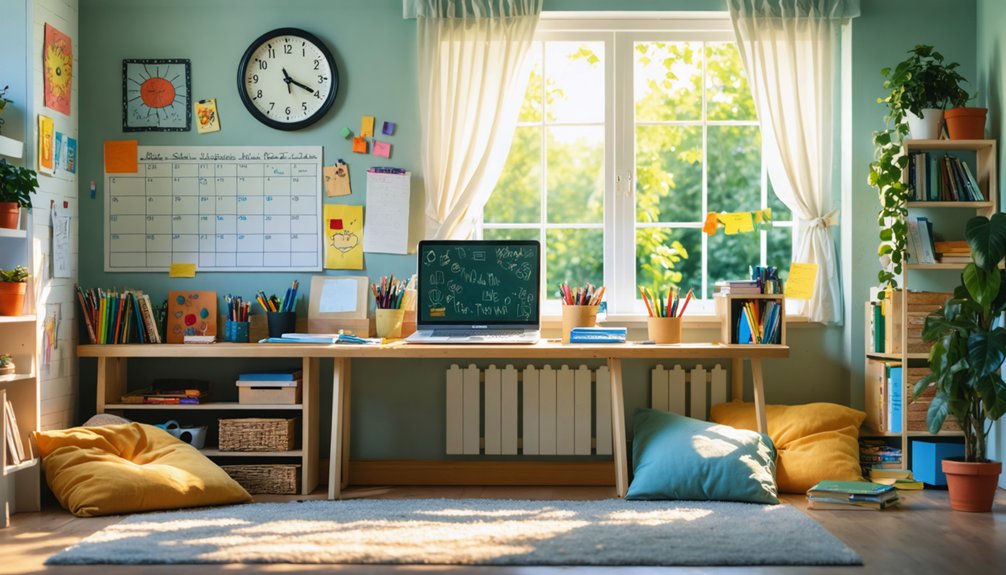
Creating a dedicated learning space is essential for effective homeschooling, as it cultivates an environment conducive to focus and engagement. Parents should assess their home’s available areas, considering the number of children and their specific learning needs. Space optimization involves designing a layout that accommodates various activities and learning styles, including group instruction and individual study zones. Essential furniture, such as adjustable desks and comfortable seating, should be arranged to maximize natural light and promote movement. Implementing organized storage solutions and designated areas for different subjects helps maintain a clutter-free learning environment. Additionally, space assessment is crucial to ensure that the room meets all the educational needs of the children.
Emphasize Flexibility in Scheduling
While traditional school systems adhere to rigid schedules, homeschooling offers unparalleled flexibility in structuring educational time. Families can implement flexible planning to customize their academic calendars, considering unique needs and family rhythms.
This adaptive scheduling allows parents to arrange learning blocks during their child’s peak cognitive hours, optimizing educational engagement. Research shows that homeschooled students can achieve comparable, if not superior, academic results in substantially less time, highlighting the efficiency of flexible homeschooling approaches. With the ability to integrate enrichment activities seamlessly into educational structures, parents can create a vibrant learning environment.
Such scheduling flexibility is not merely a luxury; it is often cited as a primary reason for families’ long-term commitments to homeschooling, nurturing an enriching and less stressful educational path.
Collaborate With Other Homeschooling Families
Collaboration among homeschooling families can substantially enhance the educational experience for both students and parents. Engaging in cooperative learning through homeschool co-ops allows families to share resources, knowledge, and experiences, promoting deeper academic enrichment.
Joint group projects, such as science fairs and field trips, not only mirror traditional classroom instruction but also strengthen social-emotional development, which is essential for all age groups. Additionally, these collaborative environments combat feelings of isolation, providing consistent peer interaction that enhances teamwork skills.
With over 78% of studies indicating that homeschooled children outperform their traditionally educated peers, families integrated into these cooperative settings enjoy improved educational outcomes, making collaboration a priceless component of the homeschooling path.
Set Realistic Educational Goals
Setting realistic educational goals is a fundamental aspect of effective homeschooling that complements the collaborative efforts made with other families. Establishing academic standards customized to each child’s unique learning style helps traverse potential learning obstacles efficiently.
Homeschooled students often excel, scoring 15 to 30 percentile points higher on standardized tests compared to their public school counterparts. By focusing on individualized goals, families can adapt curricula to align with student interests, ensuring engagement and motivation. Moreover, with flexible daily schedules, parents can allocate 3 to 5 hours for learning, optimizing time without sacrificing educational quality. This approach not only promotes a supportive learning environment but also encourages a sense of belonging among families committed to guiding their children toward academic success.
Prioritize Self-Care for Parents
Self-care is essential for parents traversing the demands of homeschooling, as it directly influences their mental health and overall effectiveness. The stress of managing educational responsibilities can lead to parental burnout, particularly among new homeschooling parents who have reported higher psychological distress.
Prioritizing mental wellness is vital; research indicates that established homeschoolers experience greater compassion satisfaction and reduced anxiety compared to their inexperienced counterparts. Integrating physical self-care practices, such as exercise, can enhance mood and resilience. Additionally, utilizing support systems within homeschooling communities promotes a sense of belonging, alleviating feelings of isolation.
References
- https://reason.com/2025/11/19/homeschooling-hits-record-numbers/
- https://eduww.net/homeschool-vs-public-school/
- https://homeschoolplanet.com/homeschooling-2025-case-study/
- https://brighterly.com/blog/homeschooling-statistics/
- https://www.mastermindbehavior.com/post/homeschooling-statistics
- https://www.magnetaba.com/blog/homeschooling-statistics
- https://babwell.com/homeschooling/
- https://nheri.org/research-facts-on-homeschooling/
- https://www.pewresearch.org/short-reads/2025/02/20/a-look-at-homeschooling-in-the-us/
- https://www.cardus.ca/news/news-releases/with-u-s-homeschooling-on-the-rise-new-research-report-provides-much-needed-data-on-outcomes/