

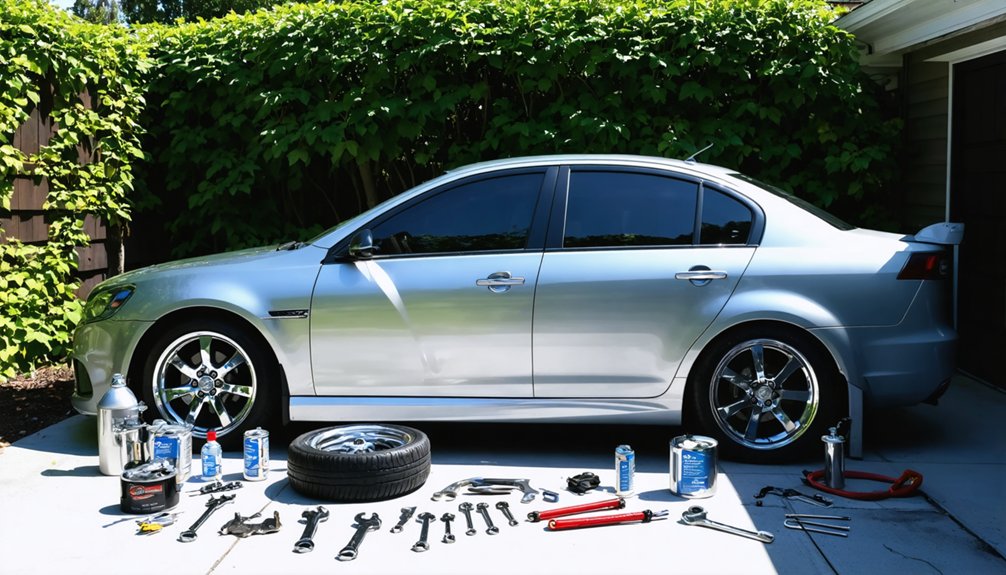

To extend a vehicle’s life, owners should adhere to routine maintenance schedules, which enhance longevity and performance. Managing fluids and filters is essential, along with regular tire care to promote even wear. Practicing gentle driving habits reduces stress on vital components. Additionally, considering environmental effects and investing in quality parts and repairs help maintain resale value. Keeping detailed maintenance records aids in preventing issues and promoting informed decisions. Learn more best practices that can optimize vehicle care.
Adhere to Routine Maintenance Schedules
Adhering to routine maintenance schedules is essential for vehicle longevity and performance. Statistics reveal alarming trends, with 29% of car owners neglecting timely oil changes and 44% forgetting tire rotations.
Effective maintenance tracking, paired with schedule notifications, can substantially alter this scenery. Preventive maintenance not only delivers a 545% return on investment but also saves drivers from costly emergency repairs, which can be three to nine times higher than routine services. Regular maintenance dramatically prolongs the vehicle’s lifespan, ensuring that drivers are not only protecting their investment but also enhancing safety on the road. Neglecting maintenance can lead to unexpected breakdowns, which compromise both safety and efficiency. Regular maintenance can also improve vehicle performance, ensuring drivers experience optimal efficiency and reliability.
Additionally, awareness of manufacturer-specific intervals helps guarantee timely inspections, extending vehicle lifespan and preserving resale value. As a community, embracing consistent care for vehicles promotes both safety and performance, reinforcing a sense of belonging among conscientious car owners dedicated to maintaining their investments.
Manage Fluids and Filters Effectively
Routine maintenance not only encompasses regular inspections and timely oil changes but also extends to effective management of fluids and filters. Establishing consistent fluid inspection procedures is vital, with monthly checks recommended for most vehicles. Proper techniques guarantee accurate readings and prevent contamination. Regular fluid checks help identify low or contaminated fluids early to prevent breakdowns and expensive repairs. Utilizing manufacturer-specified fluids is equally important; premium options can substantially extend service intervals while enhancing performance. Regularly replacing fluids, such as engine oil and brake fluid, is essential to prevent system degradation and maintain vehicle safety. Implementing sturdy leak detection protocols helps identify issues early on, safeguarding against critical fluid loss. Additionally, ensuring compatibility between fluids is vital to maintain the integrity of the vehicle’s systems.
Prioritize Tire Care and Management
Tire care and management play a crucial role in maintaining vehicle safety and performance. Regular tire rotation every 5,000 to 8,000 miles guarantees even tread wear, especially for front-wheel-drive vehicles that experience more strain. Adhering to the manufacturer’s schedule in the owner’s manual promotes maximum tire longevity. Additionally, regular pressure checks not only improve handling but also enhance fuel efficiency, making it an essential practice for every driver. Discount Tire can assist you with tire and wheel services. Regular tire maintenance is essential not only for optimizing performance but also for extending the life of your tires.
Pressure monitoring is equally essential; checking tire pressure monthly can prevent uneven wear and enhance fuel efficiency. Tires should be inspected visually for damage and monitored for proper inflation, particularly during seasonal changes. Additionally, guaranteeing that the deepest tread is positioned at the rear improves traction. By prioritizing these practices, drivers can enhance vehicle stability and safety while also extending the lifespan of their tires.
Practice Gentle Driving Habits
A vehicle’s longevity can substantially improve through the adoption of gentle driving habits. Embracing defensive driving techniques, such as smooth acceleration and gradual braking, considerably reduces wear on crucial components like the engine and brakes. Aggressive acceleration can lead to premature engine stress, while hard braking accelerates wear on brake pads and rotors. Additionally, proper driving techniques can significantly enhance the overall lifespan of your vehicle.
Consider Environmental and Climate Effects
Extending the lifespan of vehicles brings significant environmental and climate implications that warrant careful consideration. While longer vehicle lifetimes can lead to emission reduction by avoiding manufacturing emissions, it is essential to note that older vehicles often lack modern emission controls and contribute to air quality deterioration.
The operational emissions from these less fuel-efficient vehicles can offset the environmental gains made through manufacturing savings. Furthermore, the type of vehicle determines its overall impact; electric vehicles in low-carbon energy regions offer greater sustainability versus traditional thermal vehicles.
As communities increasingly prioritize sustainable driving, understanding these environmental trade-offs allows individuals to make informed choices about extending vehicle life while safeguarding public health and reducing pollution impacts, and it is vital to note that older vehicles’ emissions can significantly affect air quality and furthermore the environmental benefits of new vehicles can be maximized with the adoption of eco-friendly technologies.
Monitor Vehicle Health Regularly
Maintaining a vehicle’s longevity involves more than just considering its environmental impact; regular monitoring of its health is equally important.
Vehicle sensors play a pivotal role in this process, continuously tracking essential aspects such as engine temperature, tire pressure, and emissions.
Advanced diagnostic tools, leveraging IoT technology and AI-driven analytics, guarantee real-time supervision of critical components.
This proactive approach enables early detection of potential malfunctions, allowing for timely maintenance actions.
With the vehicle health monitoring market projected to reach $54.7 billion by 2034, adopting these technologies enhances vehicle dependability.
Engaging in regular health assessments not only minimizes unpredicted breakdowns but promotes an environment where vehicle owners feel authorized and connected to their automotive investments.
Invest in Quality Parts and Repairs
Investing in quality parts and repairs is vital for enhancing the longevity and reliability of any vehicle. Utilizing OEM components offers numerous benefits, such as ensuring seamless integration with intricate electronic systems and maintaining original vehicle specifications.
These genuine parts are rigorously tested and uphold factory standards, resulting in fewer failures and enhanced performance. Furthermore, premium components contribute to extended vehicle lifespans—often exceeding 200,000 miles—while preserving optimal fuel efficiency over time.
Vehicles equipped with quality parts typically maintain higher resale values and experience reduced repair costs due to fewer compatibility issues. In an environment where the average vehicle age exceeds 12 years, prioritizing quality repairs and genuine components is crucial for fostering a trustworthy and durable automotive experience.
Keep Detailed Maintenance Records
Keeping detailed maintenance records is essential for vehicle owners who want to guarantee their cars remain in peak condition. Organized records enhance resale value, with documented histories potentially increasing a vehicle’s worth by approximately $330. Buyers find transparency reassuring, reducing perceived risks and facilitating faster sales.
Additionally, maintenance records protect warranty coverage, as manufacturers often require proof of adherence to service intervals. These records also aid in preventative maintenance, helping identify service needs before small issues exacerbate. Moreover, efficient data analysis of prior repairs allows mechanics to diagnose problems accurately and avoid repeat work, ensuring smoother repairs.
Embracing digital record organization can simplify maintenance tracking, making it easier for owners to uphold their vehicle’s longevity and reliability.
References
- https://www.andysowards.com/blog/2025/how-regular-vehicle-maintenance-extends-car-lifespan/
- https://www.bergenautowerks.com/how-can-mechanics-extend-the-life-of-your-vehicle
- https://www.simplyfleet.app/blog/maximizing-vehicle-lifespan-fleet-maintenance
- https://www.endurancewarranty.com/learning-center/research/average-vehicle-age-increases-in-america/
- https://www.fmautobodyrepairkc.com/the-importance-of-regular-vehicle-maintenance-tips-from-auto-repair-experts
- https://autorecyclingworld.com/how-long-do-cars-really-last-in-the-usa-a-2024-deep-dive/
- https://www.consumerreports.org/cars/car-reliability-owner-satisfaction/what-is-a-reasonable-life-span-for-a-modern-car-a4678774857/
- https://fleetinsights.emkay.com/insights/the-increasing-lifespan-of-vehicles-what-it-means-for-the-automotive-industry
- https://www.progressive.com/answers/how-many-miles-does-a-car-last/
- https://www.midcoastauto.com/the-benefits-and-drawbacks-of-keeping-your-car-longer-than-average