

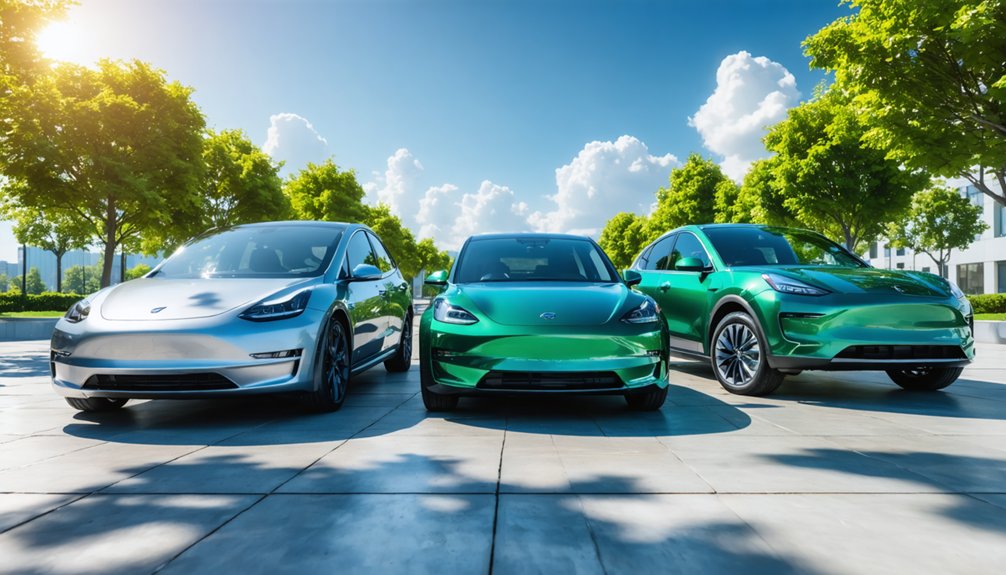

When searching for top-rated hybrid cars for daily commuting, options like the Hyundai Elantra Hybrid, Toyota Prius, and Honda Accord Hybrid stand out. These models excel in fuel efficiency, with the Elantra achieving 54 mpg combined and the Prius offering a real-world efficiency of over 50 mpg. Additionally, hybrid SUVs like the Honda CR-V and Subaru Forester provide impressive urban fuel economy. Exploring the features and benefits of these hybrids can help identify the best fit for eco-conscious commuters.
Most Fuel-Efficient Compact Hybrid Sedans
The domain of compact hybrid sedans has gained significant attention for their impressive fuel efficiency, making them increasingly appealing for daily commuters. Leading this segment is the Toyota Prius, achieving 56-57 mpg combined, consistently providing over 50 mpg in real-world testing. Close behind, the Hyundai Elantra Hybrid Blue trim offers 54 mpg combined and excels in long-range driving. The Toyota Corolla Hybrid, known for its affordability at $23,300, achieves a respectable 50 mpg combined. Honda’s Civic Hybrid ranks lower in fuel efficiency at 49 mpg but impresses with its performance capabilities. In a hybrid comparison, these vehicles distinguish themselves through technology, cost-effectiveness, and environmental benefits, solidifying their place as ideal choices for the eco-conscious commuter. Notably, hybrids offer a fuel-efficient alternative to traditional gasoline-powered vehicles. Additionally, the Toyota Camry Hybrid provides up to 52 MPG combined, showcasing another great option for efficiency-focused drivers. Given their use of regenerative braking, these vehicles further enhance their energy efficiency while driving.
Top Hybrid SUVs for Commuters
As commuters increasingly seek versatile vehicles that combine fuel efficiency with practicality, hybrid SUVs have emerged as a top choice. Models like the Subaru Forester Hybrid stand out with about 40 percent better city fuel economy than conventional options, addressing typical commuter challenges. The Honda CR-V Hybrid also achieves an impressive 40 MPG in urban settings, making it ideal for daily travel. The Toyota Crown Signia Hybrid, capable of providing 39 MPG, offers additional wagon-like cargo functionality, enhancing urban mobility. Meanwhile, Hyundai Tucson and Kia Sportage hybrids provide reliability and solid efficiency, with the 2025 Kia Sportage Hybrid boasting an EPA MPG of 35-43 combined. Each model prioritizes comfort and intuitive technology, making them excellent companions for commuters traversing city streets while accommodating their specific lifestyle needs. Notably, the 2025 Subaru Forester Hybrid Edition comes with a range of 581 miles, ensuring fewer stops for fuel during daily commutes. Furthermore, many hybrid SUVs offer significant fuel savings, allowing commuters to save even more on their daily travels.
Value Proposition of Leading Hybrid Models
While the automotive market presents a plethora of options, hybrid models have emerged as standout choices for consumers seeking both efficiency and value. The 2025 Hyundai Elantra Hybrid excels with an exceptional 54 mpg combined, making it a top contender in any hybrid comparison. Similarly, the Toyota Prius offers strong fuel efficiency at 51 mpg, sitting alongside the reliable Toyota Corolla Hybrid, which provides 50 mpg. Priced competitively, the 2025 Toyota Camry Hybrid and Honda Accord Hybrid deliver premium features at reasonable rates, appealing to value-driven shoppers. Long-term cost savings are another crucial aspect, as these hybrids optimize fuel consumption, allowing drivers to save substantially on gasoline. This blend of fuel efficiency and affordability makes leading hybrid models appealing for daily commuting. In addition, hybrid powertrain options like the Toyota Prius Hybrid offer strong hybrid drive performance with smart technology. Notably, hybrids like the 2025 Kia Niro Hybrid achieve impressive EPA MPG ratings of up to 42 combined, further enhancing their appeal for daily drivers.
Performance and Driving Experience
Hybrid vehicles are increasingly recognized for their superior performance and engaging driving experience, setting them apart from traditional gasoline models. Enhanced Driving Dynamics are evident in models like the 2025 Honda Civic Hybrid, which boasts 200 horsepower, enabling quicker acceleration than many competitors. The Toyota Camry Hybrid’s AWD configuration delivers 232 horsepower, resulting in responsive performance without compromising efficiency. The seamless shift between electric and gasoline power sources, as seen in the Honda Accord Hybrid, allows for constant acceleration, creating an enjoyable driving experience. Notably, hybrid vehicles accounted for 22% of new light-duty vehicle sales, reflecting their growing popularity among commuters. Moreover, aerodynamic designs and low center of gravity in certain hybrids improve stability and cornering abilities. These features combined contribute to an engaging, reliable experience, making hybrids an attractive choice for daily commuting; additionally, the adaptive, energetic nature of these vehicles enhances the overall driving experience. In addition, the integration of innovative technologies reinforces their appeal. Furthermore, the steady growth in hybrid electric vehicle market share highlights their appeal among buyers seeking practical yet high-performance options.
Technology and Safety Features
The integration of advanced technology and safety features has made hybrid cars a leading choice for daily commuting.
Hybrid models, such as the Honda Accord and Mitsubishi Outlander PHEV, incorporate Advanced Infotainment systems that include built-in routing and seamless connectivity options like Apple CarPlay and Android Auto.
Safety features are equally impressive, with advancements like EyeSight Driver Assist Technology, Collision Mitigation Braking, and Blind Spot Warning systems ensuring a secure driving experience.
Additionally, the Honda Sensing suite enhances overall safety by including Traffic Sign Recognition and Driver Attention Alerts.
With thorough instrumentation and visibility enhancements, these vehicles not only provide modern connectivity but also prioritize the wellbeing of their drivers and passengers, promoting a sense of community on the road.
Pricing and Ownership Costs
When considering daily commuting options, pricing and ownership costs play a critical role in the decision-making process for potential buyers. Hybrid cars typically have initial purchase price premiums ranging from $2,000 to $2,700 compared to gas-only models.
However, they frequently demonstrate significant savings, averaging $400 annually on fuel costs due to superior fuel efficiency. Ownership costs of hybrids over five years are lower than gas vehicles, with the total cost of ownership for a 2025 RAV4 Hybrid estimated at $35,289 versus $38,624 for its gas counterpart. Additionally, hybrid maintenance costs are reduced, further enhancing their appeal. For those traversing the price comparison, hybrids offer a balanced option that marries efficiency with affordability.
Environmental Impact of Hybrid Vehicles
A vital aspect of modern transportation, the environmental impact of hybrid vehicles is increasingly scrutinized as society seeks sustainable alternatives to traditional gasoline-powered cars. Hybrid Electric Vehicles (HEVs) offer a notable emission reduction, producing 188 g CO2e/km—20% lower than conventional gasoline vehicles.
Plug-in Hybrid Electric Vehicles (PHEVs) further reduce emissions to 163 g CO2e/km, showcasing a 30% advantage. Though manufacturing hybrids may initially heighten emissions, their operational benefits, including lower tailpipe emissions and reduced greenhouse gases, markedly decrease the carbon footprint over time.
Long-term adoption of hybrids can substantially contribute to global CO2 reduction targets, making them a viable choice for environmentally conscious commuters. Their efficiency highlights the potential for meaningful environmental change in daily transportation, where a vital component of this change is the reduced emissions from hybrid vehicles.
Comparing Hybrid Models: Which Is Right for You?
Selecting the right hybrid vehicle for daily commuting involves considering various factors, such as fuel economy, price, and vehicle type.
A hybrid comparison reveals that the Hyundai Elantra Hybrid leads with an impressive 54 mpg combined, closely followed by the Toyota Prius at 53 mpg.
For those seeking compact options, the Honda Civic and Corolla hybrids offer excellent options with their affordability and efficiency.
Evaluating ownership costs is vital; while the Kia Niro Plug-In Hybrid provides advanced technology and spaciousness, its MSRP varies substantially.
Ultimately, understanding individual commuting needs—whether prioritizing fuel efficiency or interior space—ensures that drivers make informed decisions.
Selecting the right model promotes a sense of belonging to a community that values sustainability and efficiency.
References
- https://www.amerifreight.net/blog/top-10-fuel-efficient-hybrid-cars-for-2025
- https://autotrends.tomtepe.com/post/the-2025-commuter-car-challenge-a-head-to-head-comparison-for-indiana-drivers
- https://www.youtube.com/watch?v=UFqAULhimr0
- https://www.caranddriver.com/rankings/best-hybrid-cars
- https://www.motortrend.com/rankings/hybrid-cars
- https://www.edmunds.com/hybrid/
- https://www.motortrend.com/features/best-gas-mileage-hybrids
- https://www.mossynissanelcajon.com/blog/sedan-fuel-efficiency-ratings-what-gets-the-best-mpg/
- https://www.edmunds.com/car-news/most-fuel-efficient-hybrids-2025.html
- https://www.truecar.com/best-cars-trucks/sedans/segment-compact/by-gas-mileage/